Warehouse efficiency usually comes down to one key thing: how you move materials around.
A lot of operations lean on forklifts or manual carts separately, but the real gains happen when you start using them together in a more connected way.
When warehouse carts and forklifts work as a system instead of two separate tools, warehouses can cut down on extra labor, move faster through tasks, and reduce unnecessary handling. It’s a pretty simple shift, but it can noticeably improve day-to-day operations without needing a full overhaul.
Why Material Handling Efficiency Matters
In most warehouses, a lot of time and effort goes into simply moving products from point A to point B. When that isn’t a smooth process, it can slow everything else down.
Some common issues include:
- Workers manually moving items short distances
- Forklifts not being used to their full potential
- Delays between picking, staging, and shipping
- Products being handled multiple times before reaching their final spot
All of this adds up to higher labor costs and slower output. Tightening up how materials move through your warehouse is one of the quickest ways to improve overall performance.
The Role of Forklifts in Warehouse Operations
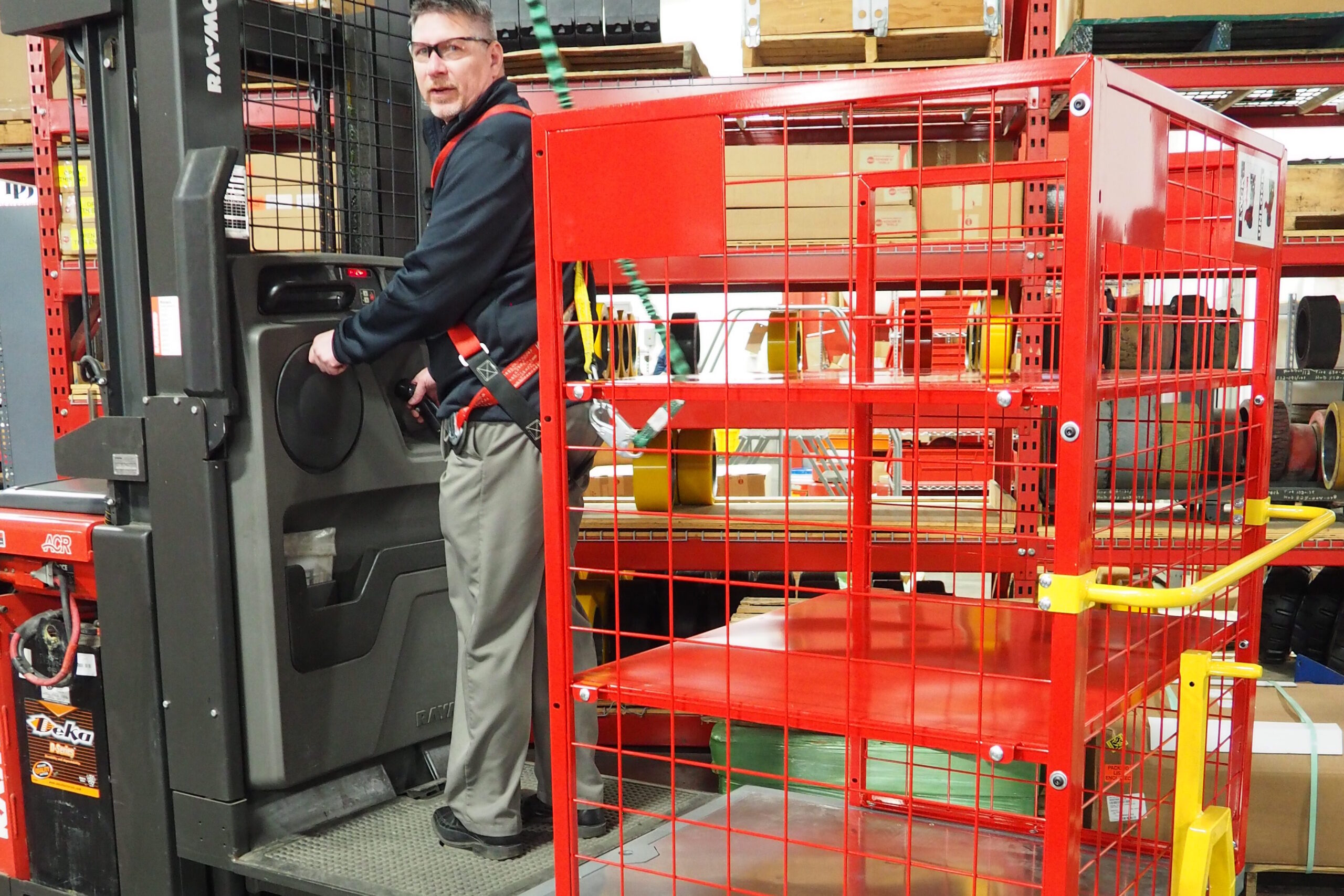
Forklifts are built for speed and power, making it easy to move heavy loads quickly without putting extra strain on workers.
They’re typically used for things like:
- Moving pallets across longer distances
- Loading and unloading shipments
- Transporting large quantities of materials
In high-volume warehouses, forklifts are a must. That said, they work best when used strategically, not for every single move happening on the floor.
The Problem with Disconnected Workflows
Even when both carts and forklifts are used, they often operate separately rather than as part of a unified system. Workers may pick and stage items on carts, only to manually transfer them before forklift transport.
This leads to:
- Unnecessary handoffs between equipment
- Workflow bottlenecks
- Increased risk of injury
- Lost time between steps
Improving efficiency isn’t just about the tools, it’s about how well they work together.
How to Integrate Carts with Forklifts
Integrating carts with forklifts means designing a workflow where both tools complement each other instead of working in isolation.
Here are a few practical ways to do that:
1. Use Carts for Staging and Organization
Carts can be used to organize materials before transport. Instead of moving items individually, workers can load them onto carts during picking or sorting.
Once a cart is fully loaded, it’s ready to move as a single unit, cutting down on repeated trips and keeping workflows more organized.
2. Transport Carts Using Forklifts
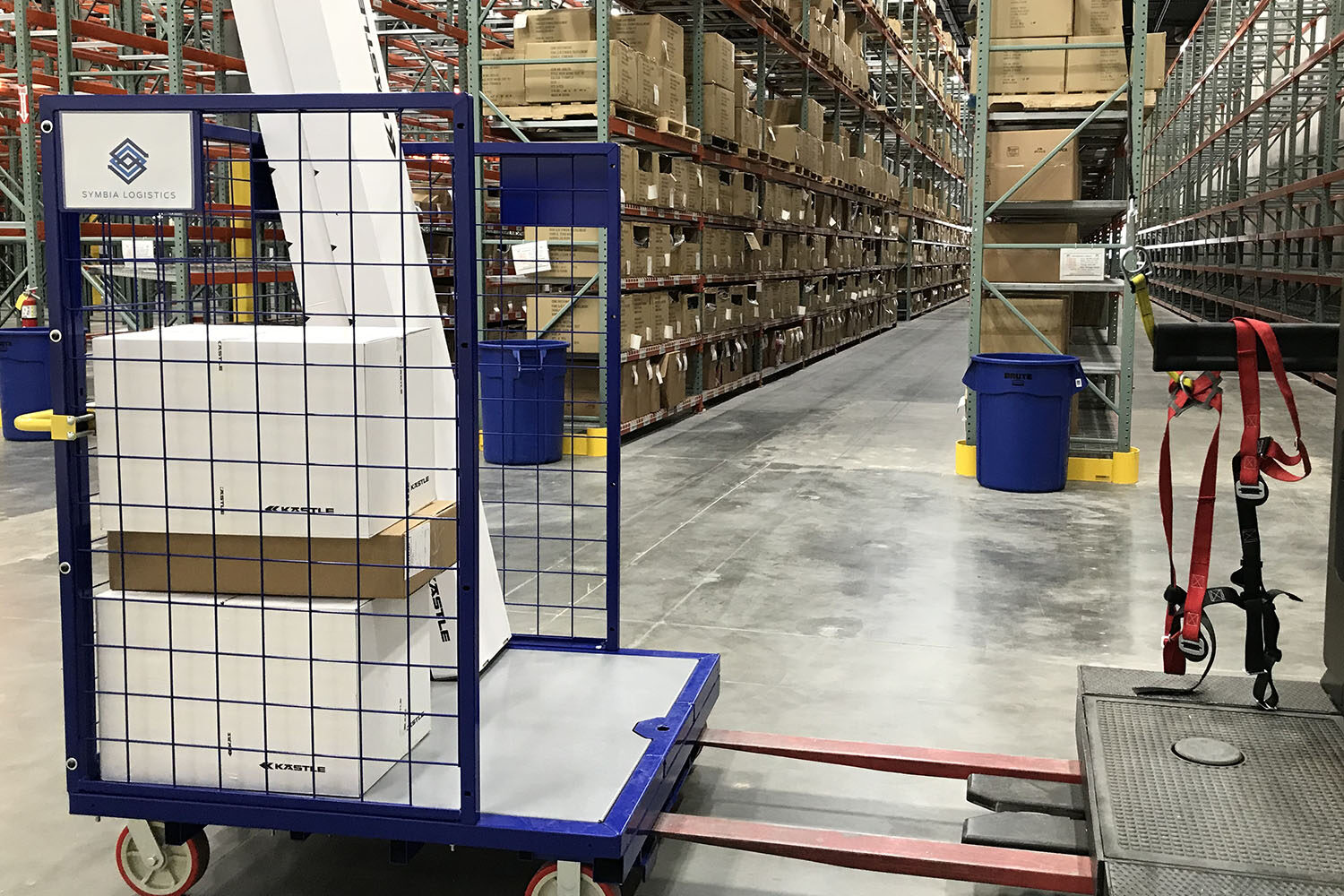
Instead of pushing carts manually across long distances, forklifts can be used to move them in bulk. This is often referred to as using carts with powered industrial trucks (PIT), a strategy that improves long-distance movement and reduces reliance on manual transport.
This approach:
- Reduces physical strain on workers
- Moves materials across the warehouse faster
- Makes it easier to handle larger loads
This is especially valuable in larger facilities where distance has a bigger impact on efficiency.
3. Minimize Touchpoints
Every time a product is handled, it adds time and increases the risk of damage or error.
By integrating carts and forklifts, materials can move through the warehouse with fewer handoffs, going from staging to transport to final placement with minimal interruption.
4. Create Dedicated Workflow Zones
Designating areas for staging, transport, and unloading can help streamline operations.
For example:
- A picking zone where carts are loaded
- A staging area where carts are grouped for transport
- A forklift zone for moving carts efficiently across the warehouse
This type of structure reduces confusion and improves consistency.
The Role of Forklift-Compatible Carts
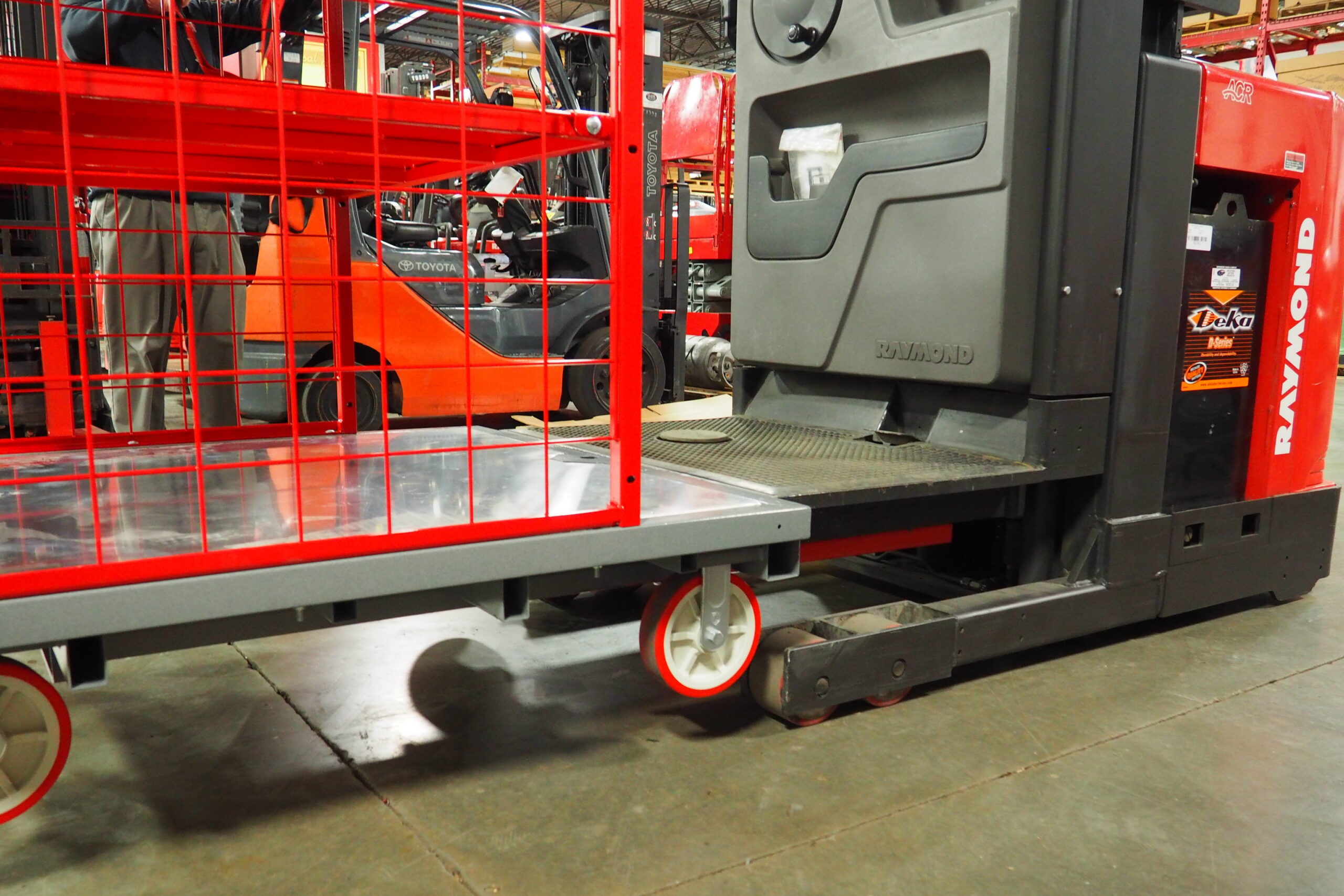
For warehouses that rely heavily on forklifts, standard carts may not be enough. Forklift-compatible carts are designed specifically to bridge that gap, allowing carts to be safely lifted and transported without additional transfer steps.
Instead of forcing immediate palletization during picking, materials can remain on carts until the most efficient point for consolidation.This creates a more direct, continuous workflow.
This approach leads to:
- Faster transport times
- Reduced labor requirements
- Improved safety
- More efficient workflows
For operations that already use forklifts regularly, switching to compatible carts can help streamline material movement and improve overall performance.
Cost Advantages Compared to VRC Elevators
Some operations look to vertical reciprocating conveyors (VRC elevators) to move materials between levels, but these systems come with significant upfront and ongoing costs.
VRC systems often require:
- Major capital investment
- Structural modifications to the facility
- Ongoing maintenance and downtime considerations
In contrast, using carts in combination with forklifts provides a far more flexible and cost-effective solution.
With forklift-compatible carts, warehouses can:
- Move materials vertically and horizontally without fixed infrastructure
- Avoid large installation costs
- Adapt workflows as needs change without being tied to a permanent system
For many facilities, especially those looking to scale or stay agile, carts offer a practical alternative that delivers similar operational benefits without the heavy investment.
Real-World Use Cases
Integrating carts with forklifts can be applied in a variety of warehouse scenarios:
Order picking and fulfillment
Items are picked directly into carts, which are then transported in bulk using forklifts.
Dock-to-stock movement
Materials are loaded onto carts at receiving and moved quickly to storage locations.
Batch processing
Multiple orders are grouped and transported together, reducing trips and saving time.
In each case, the goal is the same: reduce manual effort and improve flow.
High-Reach Picking to Cart to Pallet
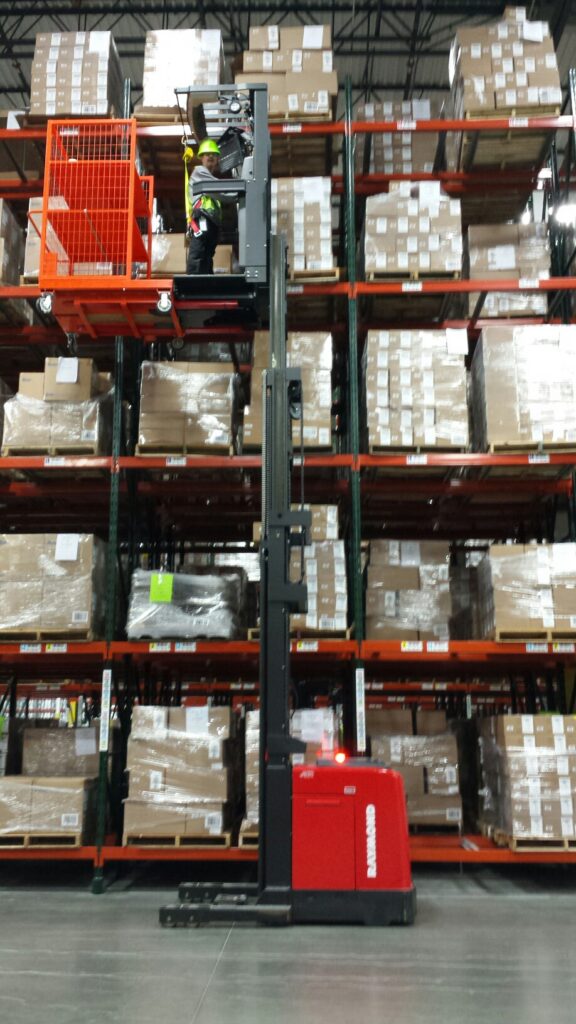
In many real-world warehouse environments, especially those with high racking systems, order picking doesn’t happen all at once on a pallet.
Instead, workers often rely on a more flexible process:
- Items are picked from high-reach locations using forklifts or order pickers
- Products are placed directly onto carts during the picking process
- Once picking is complete, carts are transported and consolidated onto pallets for shipping or storage
This approach allows teams to:
- Keep picking workflows efficient without waiting to build full pallets in the aisle
- Reduce congestion in high-traffic picking zones
- Improve organization when handling mixed or smaller orders
By using carts as an intermediate step between high-reach picking and final palletization, warehouses can maintain speed and flexibility without disrupting overall flow.
Choosing the Right Setup for Your Warehouse
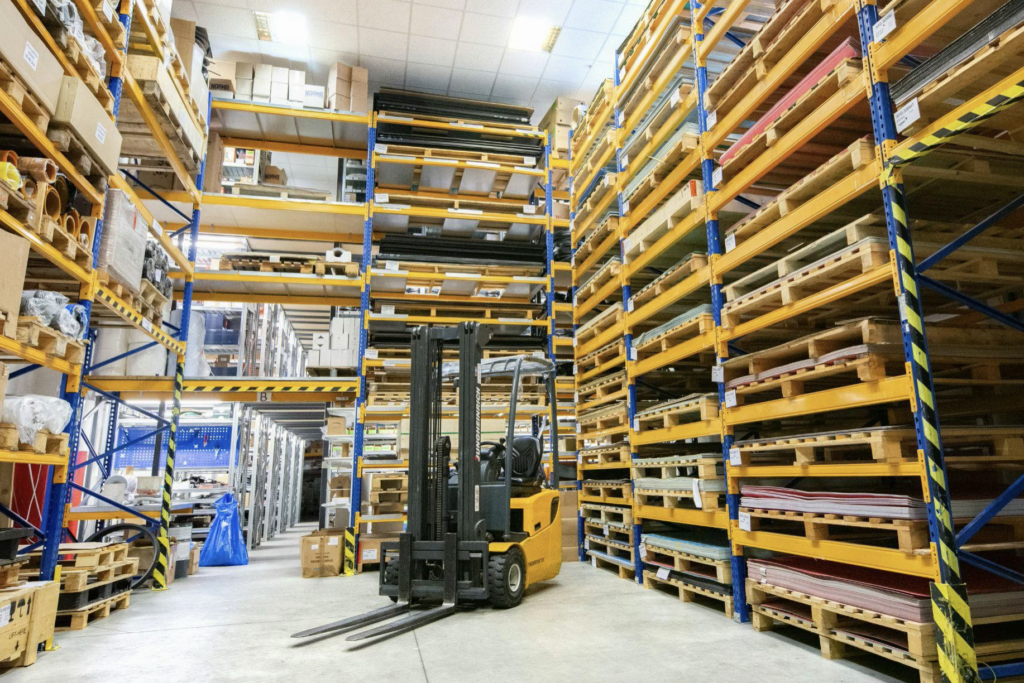
Every warehouse is different, so the best integration strategy will depend on your specific operation.
Consider:
- The size and layout of your facility
- The volume of materials being moved
- How often forklifts are used
- Where delays or bottlenecks currently occur
If your team is spending too much time moving items manually, or if forklifts are underutilized, there’s likely an opportunity to improve your system.
Integrating Carts with Forklifts Using National Cart Solutions
Integrating carts with forklifts isn’t about adding more equipment, it’s about using the tools you already have more effectively. With solutions from National Cart, warehouses can better connect their existing systems and eliminate unnecessary steps.
By combining the flexibility of carts with the power of forklifts, warehouses can streamline operations, reduce labor, and move materials faster with fewer steps.
Small changes in how materials are handled can lead to significant improvements in efficiency, safety, and overall productivity. For operations looking to scale or optimize, creating a more connected material handling system is a smart place to start.