Domestic manufacturing is becoming increasingly important in the material handling industry, and why is that? It’s because companies are looking for shorter lead times, more consistent quality, and equipment that can better fit the way they operate.
As a U.S. manufacturer of carts and other material handling equipment, National Cart handles many key parts of the production process in-house. That gives its engineering and production teams more control over how products are built, adjusted, and checked before they reach the customer.
What Domestic Manufacturing Looks Like at National Cart
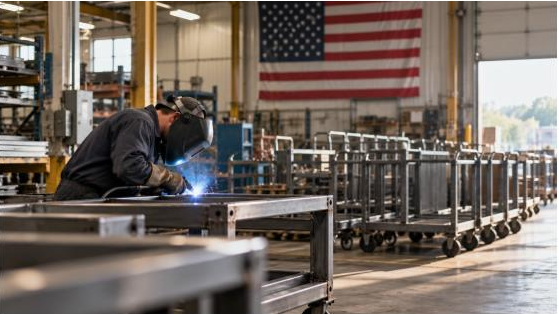
National Cart uses a vertically integrated manufacturing process, which means many of the steps involved in designing and building our material handling equipment are handled in our own U.S. facilities rather than by several outside suppliers.
Those capabilities include:
- Engineering
- Metal fabrication
- Tube and wire forming
- Welding and robotic welding
- Powder coating
- Assembly
- Final quality control
As Paul Deutsch, Vice President of Sales and Marketing at National Cart, explains:
“Being an American manufacturer allows us to stay close to our customers, control our processes, and take pride in building products here in the U.S. with people who understand manufacturing.”
How Domestic Manufacturing Benefits Customers
Domestic manufacturing doesn’t just benefit the manufacturer. For material handling customers, it can mean faster production, easier customization, and better visibility into quality throughout the process.
More Predictable Lead Times
The farther materials or finished products have to travel, the more chances there are for delays along the way. Shipping issues, port congestion, supplier problems, and long transit times can all make it harder to know exactly when equipment will arrive.
Domestic manufacturing helps cut down on some of that uncertainty by keeping more of the process closer to home. For National Cart, handling many manufacturing steps in the U.S. also makes it easier to keep track of production schedules and give customers a clearer idea of timing.
Easier Customization
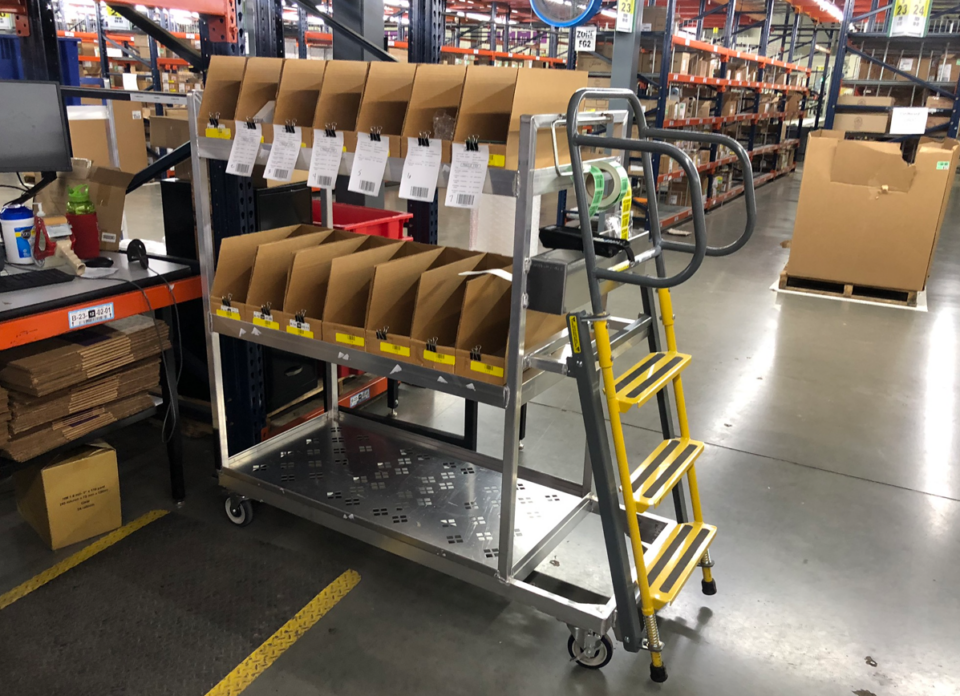
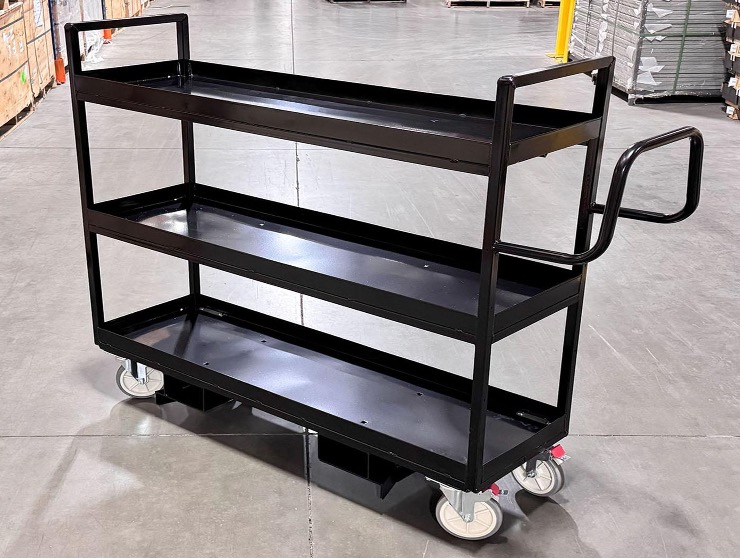
Material handling equipment isn’t always one-size-fits-all. Different facilities may need different sizes, finishes, components, or safety features to fit the way they work.
Domestic manufacturing can make those changes easier to handle. At National Cart, engineering and production teams work closely together to review and implement custom requests.
That could include:
- Modifying an existing component
- Adjusting a product for a specific workflow
- Changing colors or finishes
- Adding safety features
- Creating a custom design
Sometimes, even a small change to a piece of equipment can make a workflow smoother, solve a recurring problem, or help a company get more value out of what it’s using.
Closer Quality Control
When more of the manufacturing process happens in one place, it’s easier to monitor quality along the way and catch issues before a product is finished.
At National Cart, quality checks happen during fabrication, welding, finishing, assembly, and final inspection. If something needs to be adjusted, teams can address it directly and keep production moving.
“Domestic manufacturing gives our customers greater flexibility, shorter and more predictable lead times, and the ability to customize or modify products quickly when their needs change. It also reduces our dependence on overseas supply chains,” shares Deutsch.
Responding When Customer Needs Change
One of the biggest benefits of keeping engineering and manufacturing close together is being able to respond quickly when something needs to change.
If a customer needs a different component or has a new requirement, National Cart can review it without adding extra steps between engineering and production. Sometimes that means a simple change, like adjusting a color or modifying a part. Other times, it may mean creating a completely new solution.
Either way, the goal is to move from identifying a need to putting the right equipment in place as efficiently as possible.
What Are Material Handling Customers Looking For?
Choosing a material handling manufacturer isn’t just about the product itself. It’s also worth looking at how the company operates and how easily it can respond when your needs change.
A few questions to consider:
- Where is the equipment made?
- Can it be customized?
- How quickly can changes be made?
- How is quality checked?
- How reliable are production and delivery timelines?
- How much does the manufacturer rely on overseas suppliers?
These questions can give customers a better idea of what it will actually be like to work with that manufacturer.
The Role of Domestic Manufacturing in Material Handling
For National Cart, domestic manufacturing is really about staying closer to the process and closer to the customer. Keeping key capabilities in-house makes it easier to respond when needs change, whether that means modifying an existing product or developing something new.
As material handling operations continue to evolve, that flexibility helps National Cart focus on what matters most: building equipment that solves real problems and helps customers work safer, more efficiently, and with fewer disruptions.