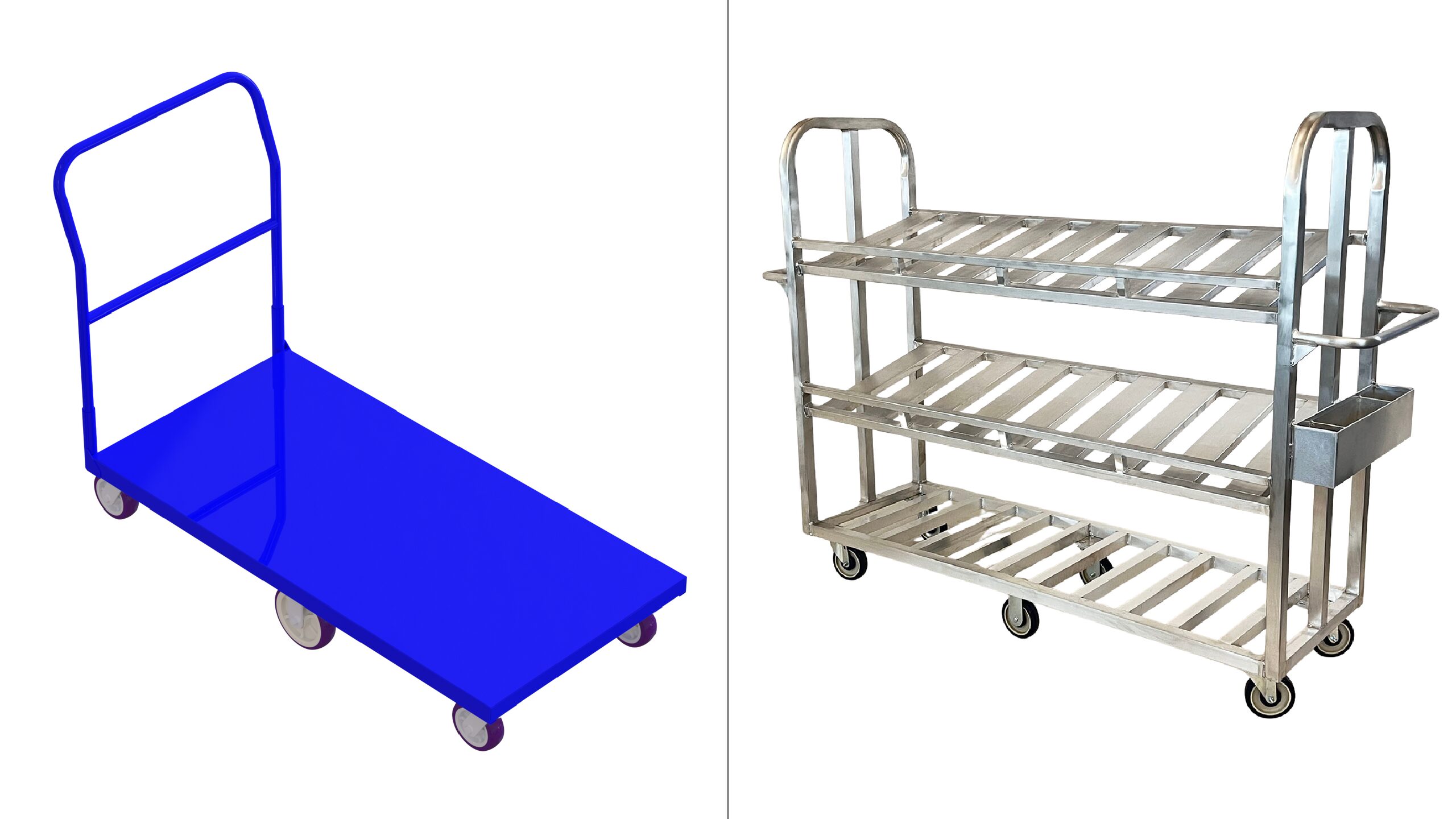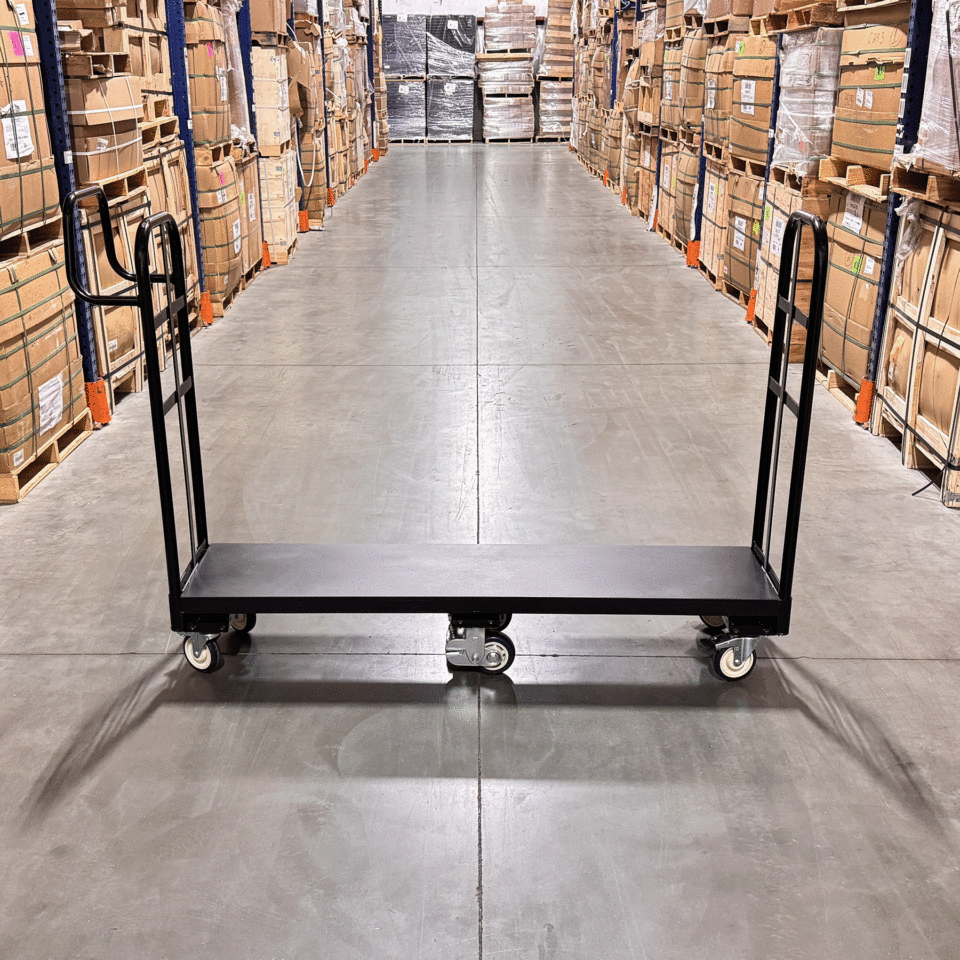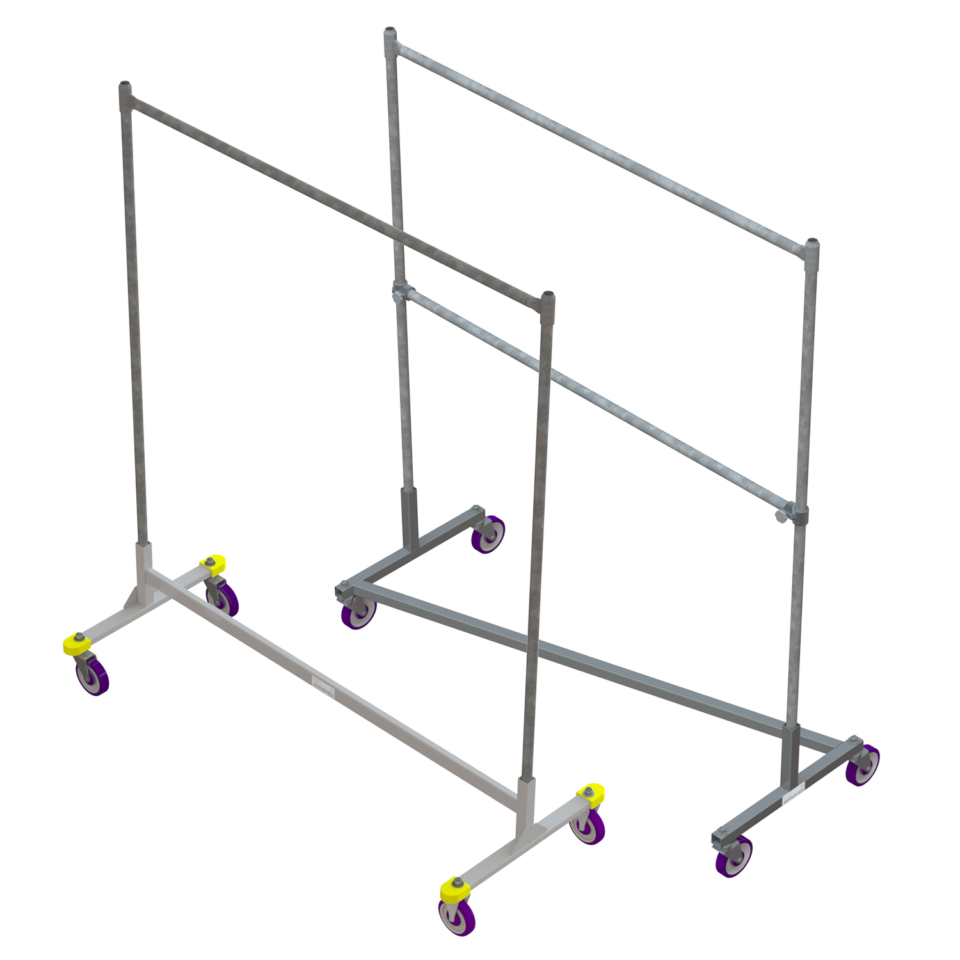
When selecting warehouse carts, it is easy to focus on size, shelving, or weight capacity. However, performance often comes down to one critical component: the caster wheels for your warehouse cart.
The right warehouse wheels improve mobility, reduce employee strain, and protect your flooring investment. The wrong choice can lead to excessive noise, surface damage, and higher long term maintenance costs. The key is matching wheel material to your facility’s floor type and daily workload.
National Cart designs material handling solutions with real world warehouse demands in mind. If you are evaluating your overall cart strategy, this guide to keeping warehouse operations safe and simple outlines how the right equipment supports efficiency and safety across your operation.

Smooth Concrete Floors
Best choice: Polyurethane wheels
Polished or sealed concrete is common in distribution and fulfillment centers. Polyurethane caster wheels for warehouse carts perform especially well on smooth concrete because they combine durability with floor protection.
Benefits include:
- Strong load bearing capacity
- Quiet operation
- Non marking material
- Resistance to flat spotting under heavy loads
For high traffic facilities, polyurethane provides long lasting performance without compromising floor condition.

Rough Concrete or Dock Areas
Best choice: Rubber or pneumatic wheels
Warehouses with older concrete, visible expansion joints, or dock transitions require more shock absorption. Hard wheels can create vibration that affects both product stability and employee comfort.
Rubber or pneumatic warehouse wheels help absorb impact and roll more smoothly across uneven surfaces. They are particularly useful when carts move between interior floors and loading areas.

Epoxy Coated Flooring
Best choice: Non marking polyurethane
Epoxy coated floors are often used in food service, healthcare, and specialty operations where cleanliness matters. While durable, these surfaces can scratch under excessive pressure from rigid materials.
Non marking polyurethane caster wheels for your warehouse cart provide traction and stability while helping preserve the integrity of coated flooring.

Tile or Specialty Flooring
Best choice: Soft rubber wheels
Retail backrooms or mixed use facilities may feature tile or specialty surfaces. In these environments, softer rubber wheels distribute weight more evenly and reduce the risk of cracking or chipping under heavy loads.
Aligning Wheels with Cart Design
Wheel selection should also align with the type of warehouse carts in use. Picking carts typically support lighter, faster movement throughout aisles. Platform carts are built to transport heavier bulk items.
If you are comparing configurations, this overview of picking carts vs platform carts explains how each option supports different workflows. Choosing the appropriate cart style first makes it easier to determine which wheel material will deliver optimal performance.
Selecting the Right Caster Wheels for Warehouse Carts
Before finalizing your decision, consider:
- Weight capacity per wheel
- Surface onditions throughout the facility
- Frequency of use
- Environmental exposure
- Noise expectations
National Cart builds solutions that account for these operational variables, ensuring carts are equipped to perform reliably in demanding environments.
The right caster wheels for your warehouse cart can significantly improve safety, productivity, and long term durability. If you are planning an upgrade or expanding your fleet, exploring National Cart’s warehouse cart solutions is a practical next step toward optimizing your operation.